


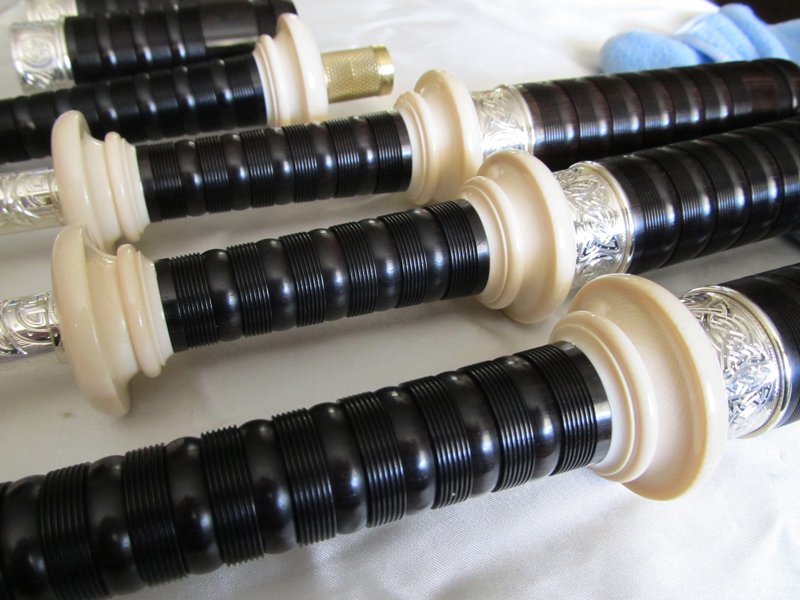
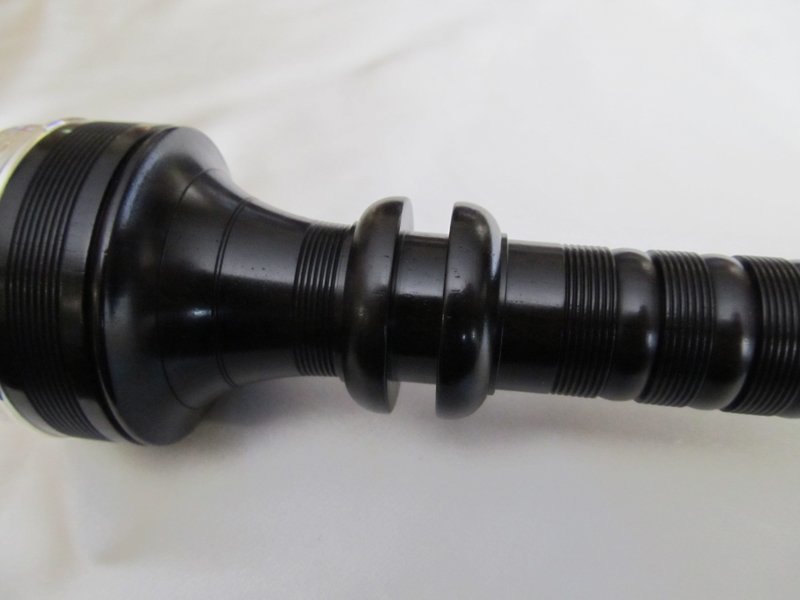
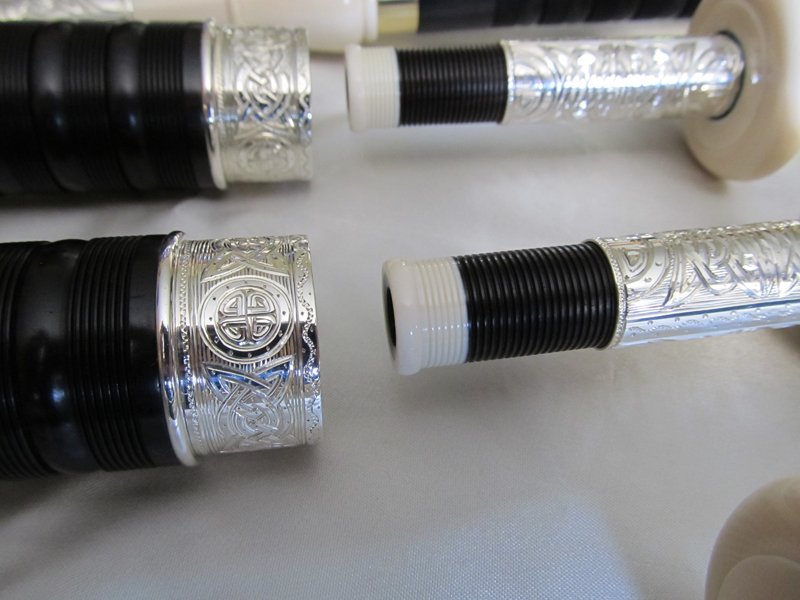
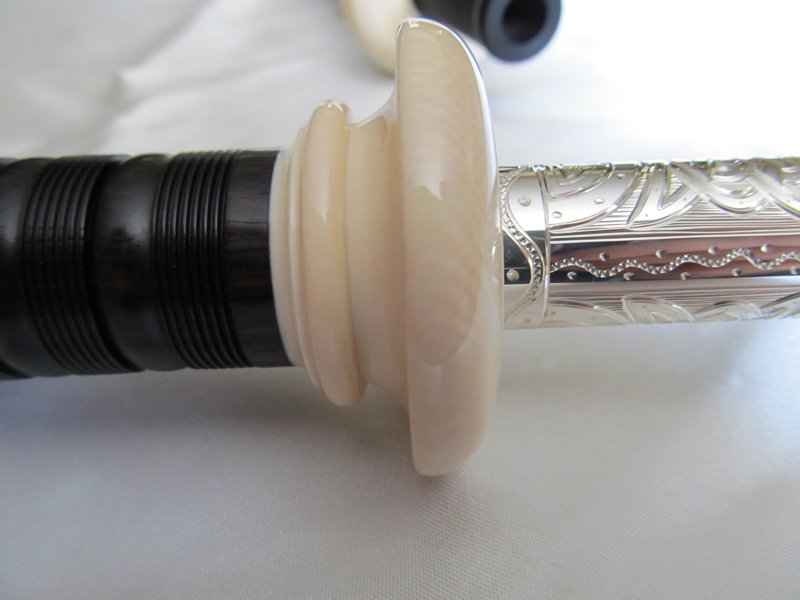
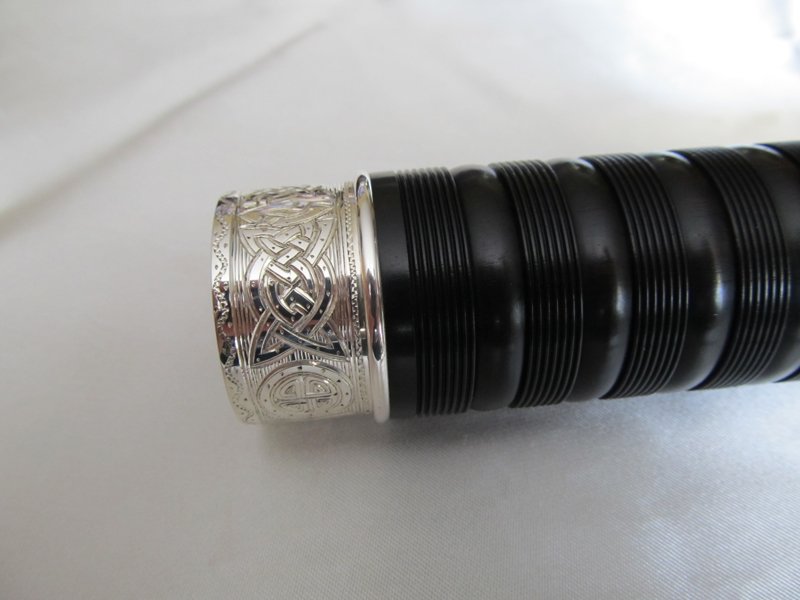
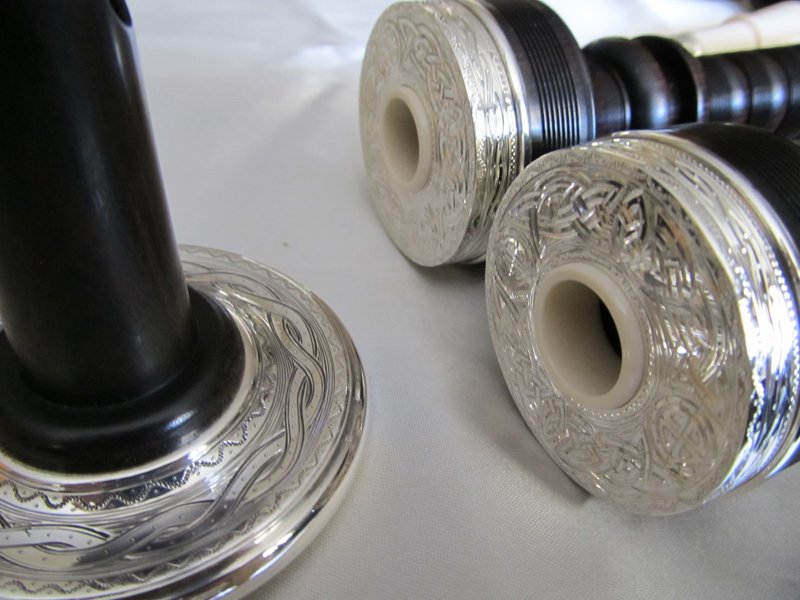
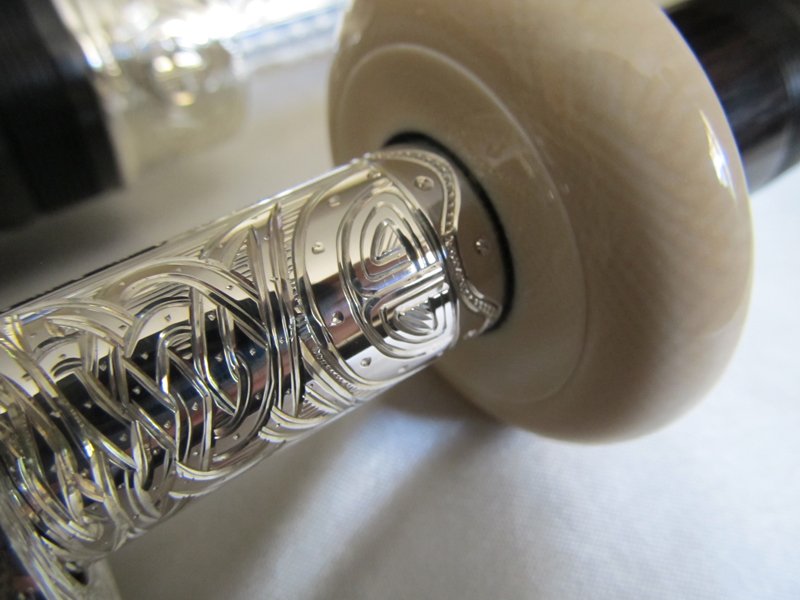
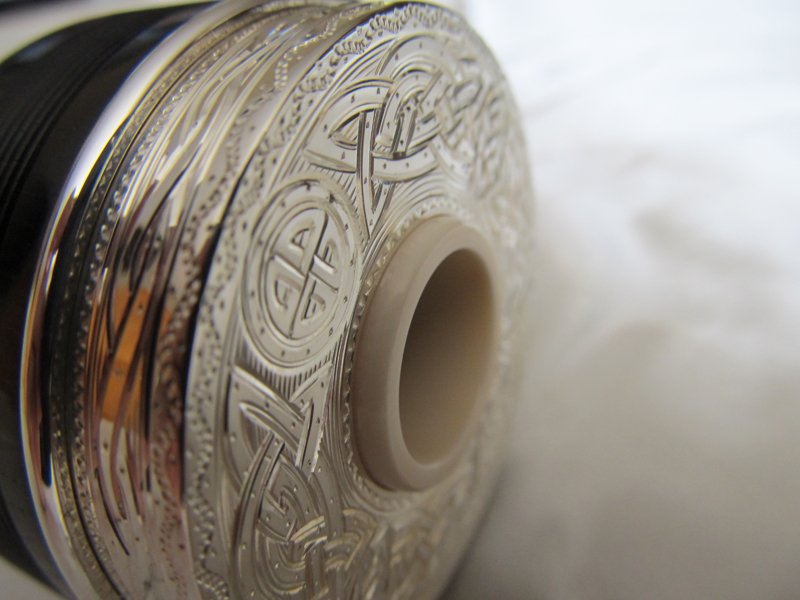
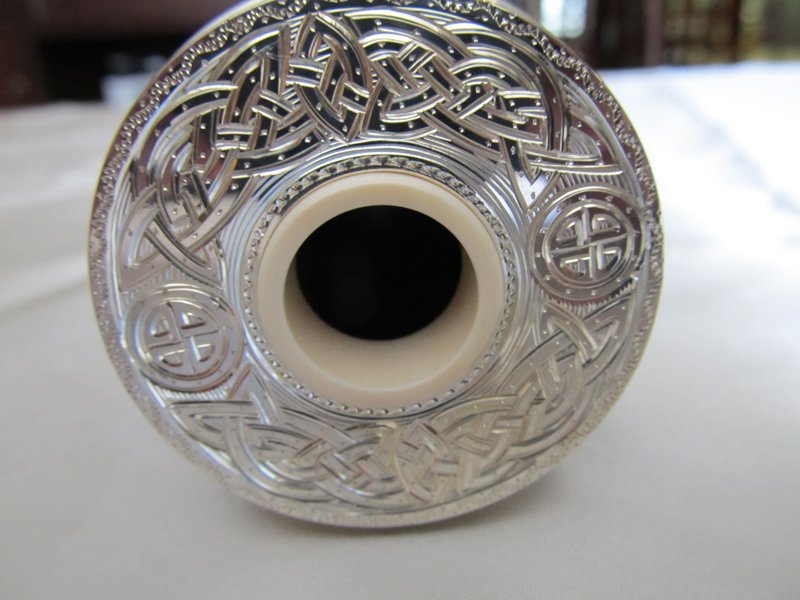
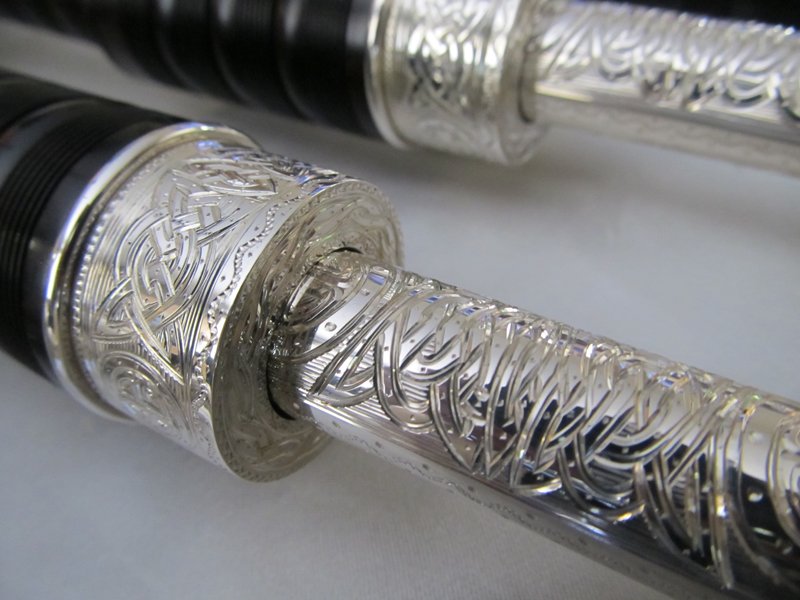
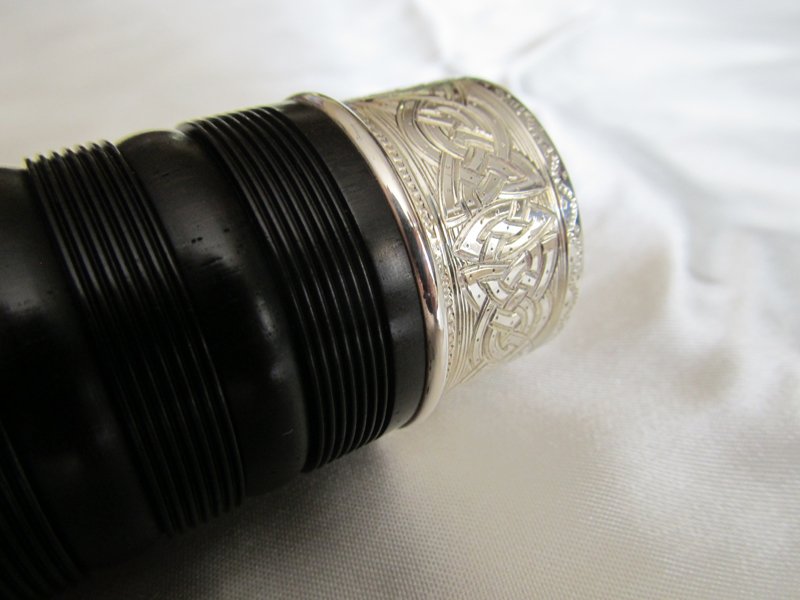
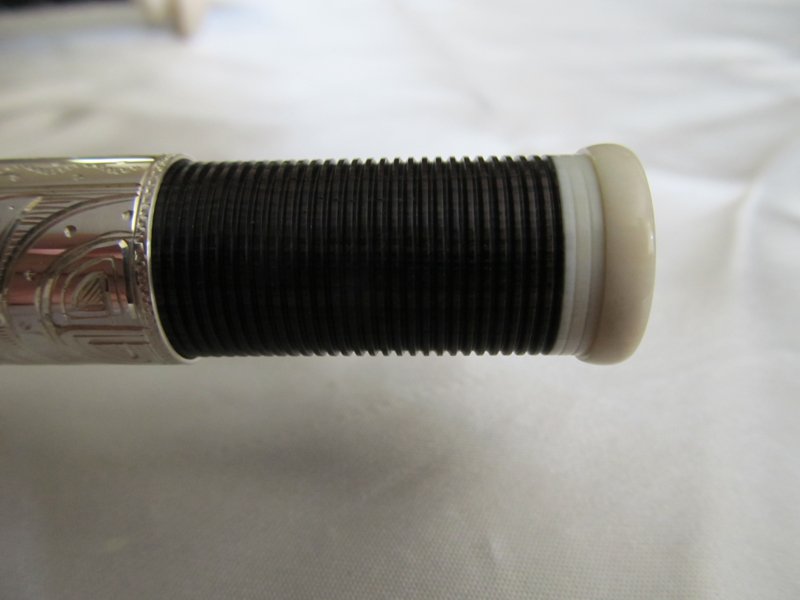
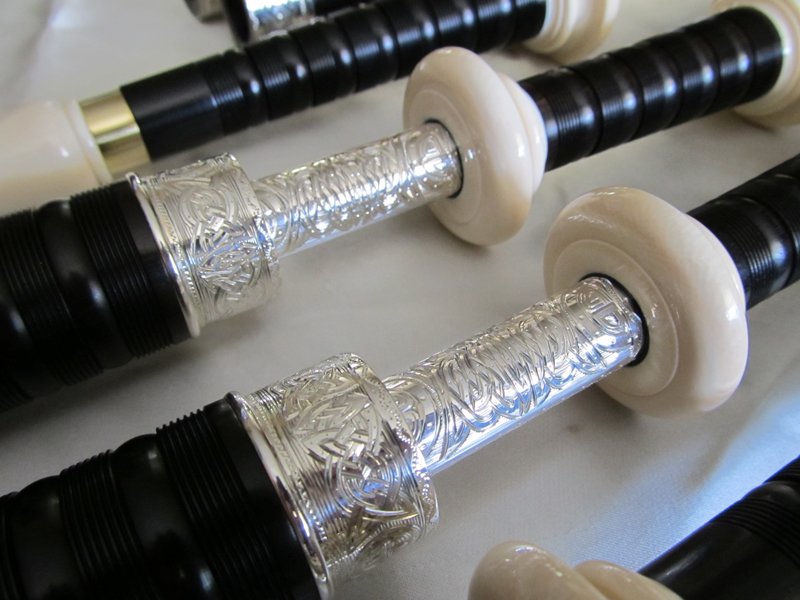
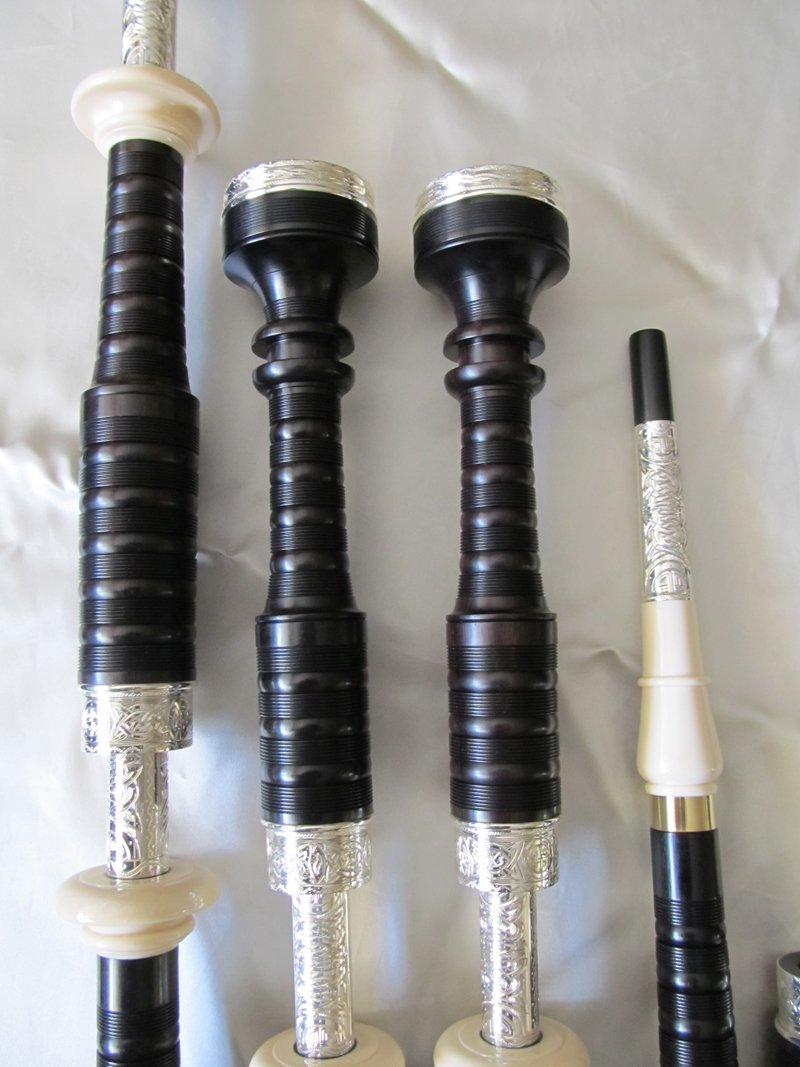
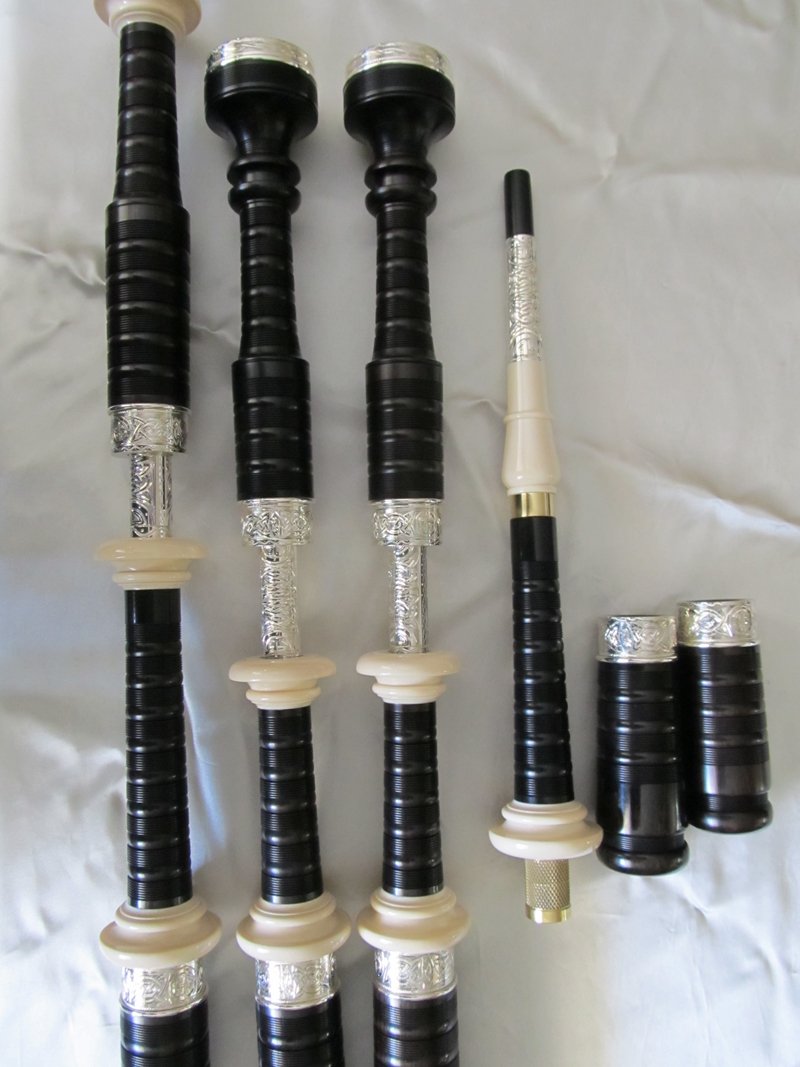
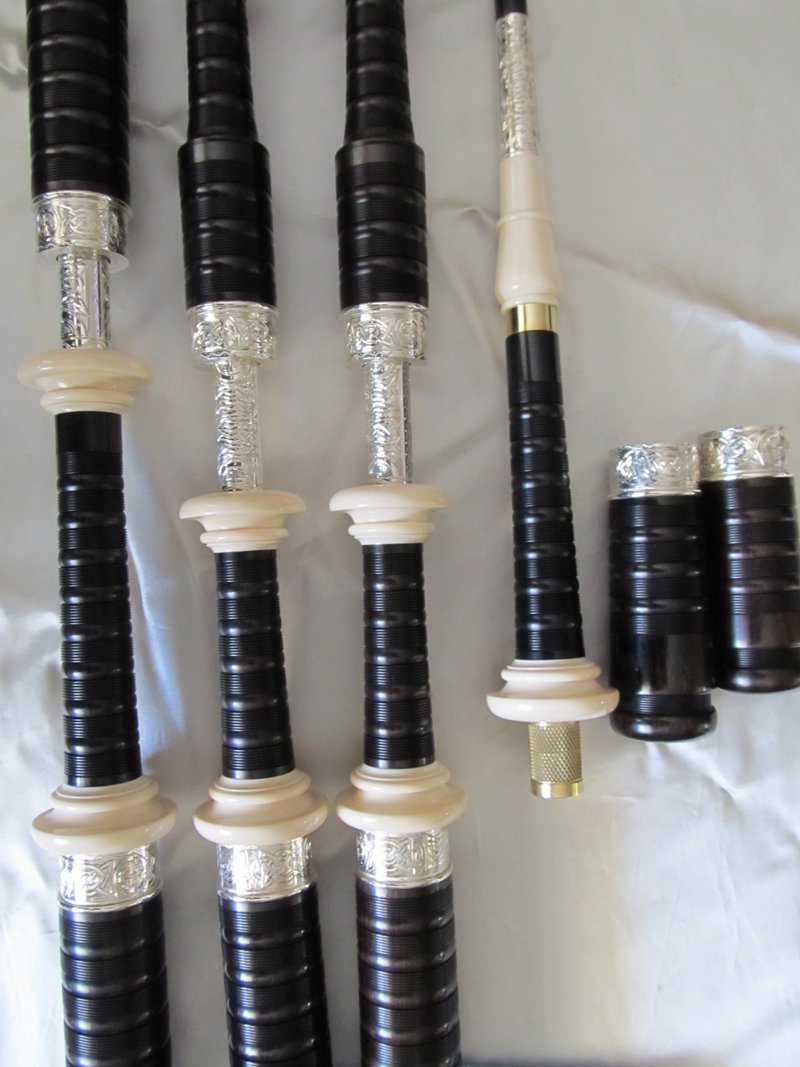
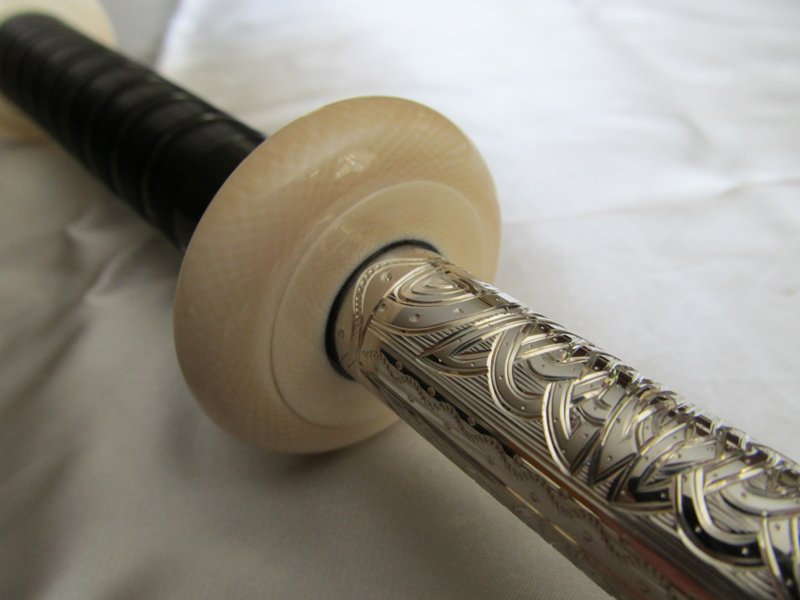
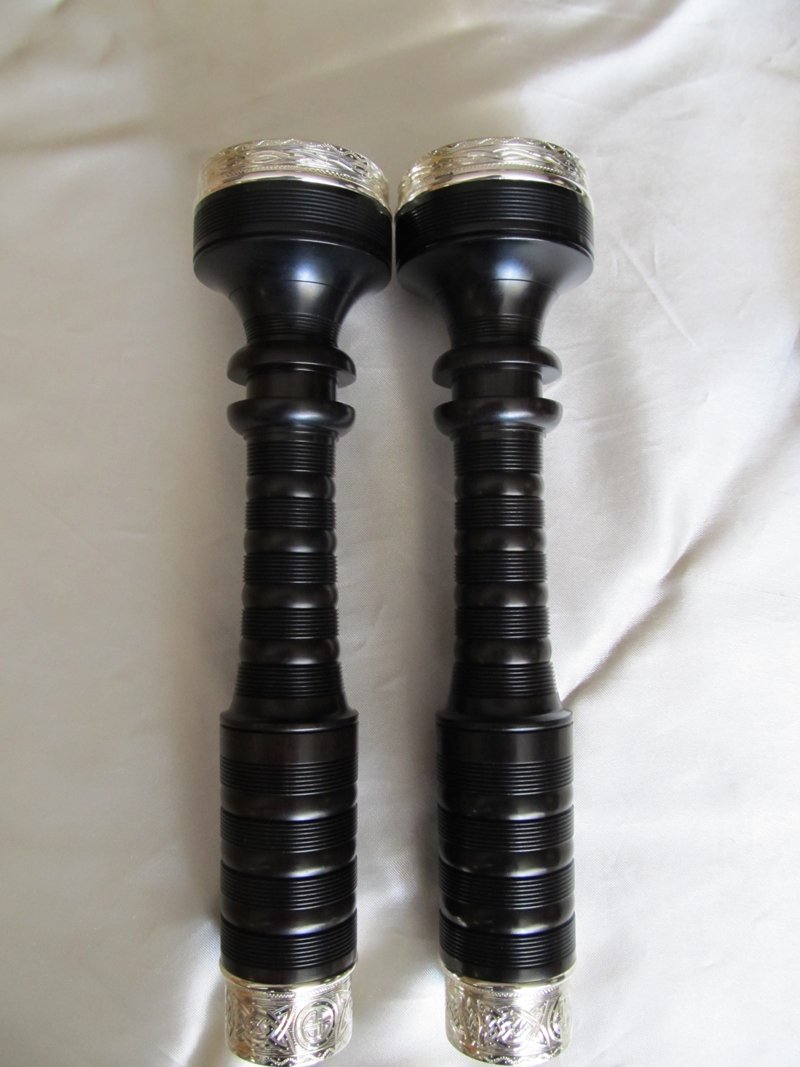
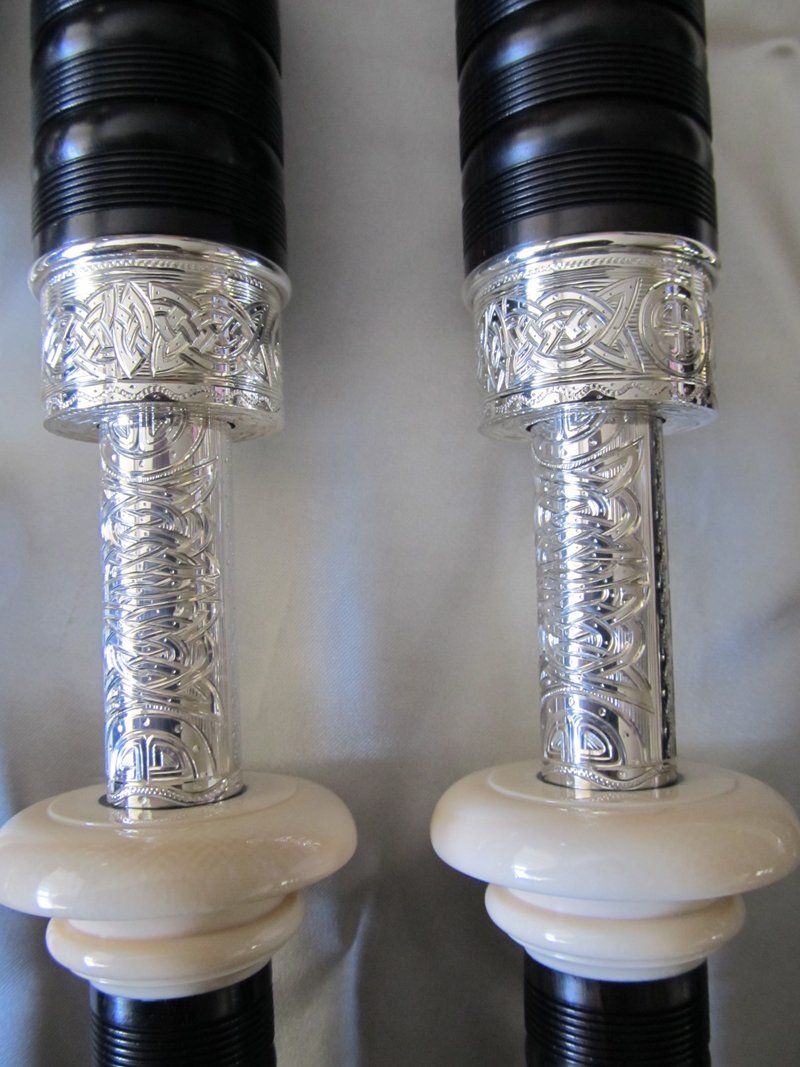
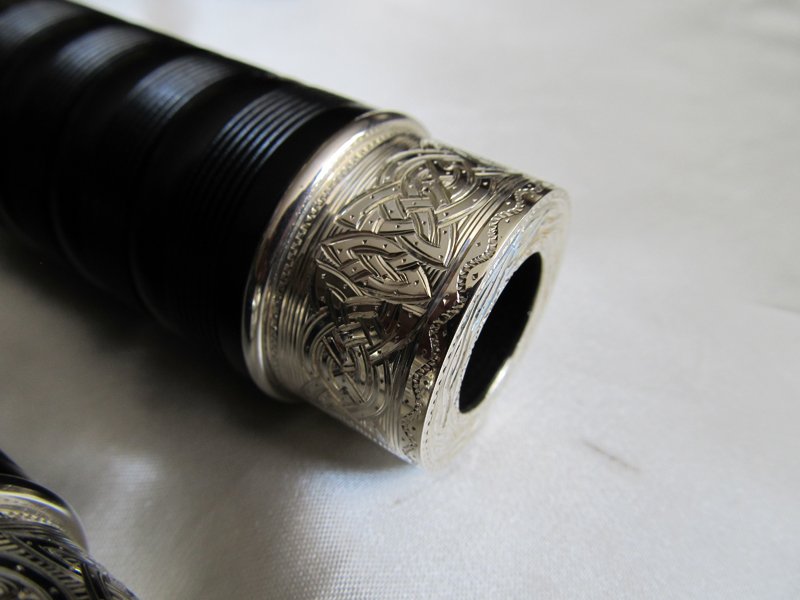
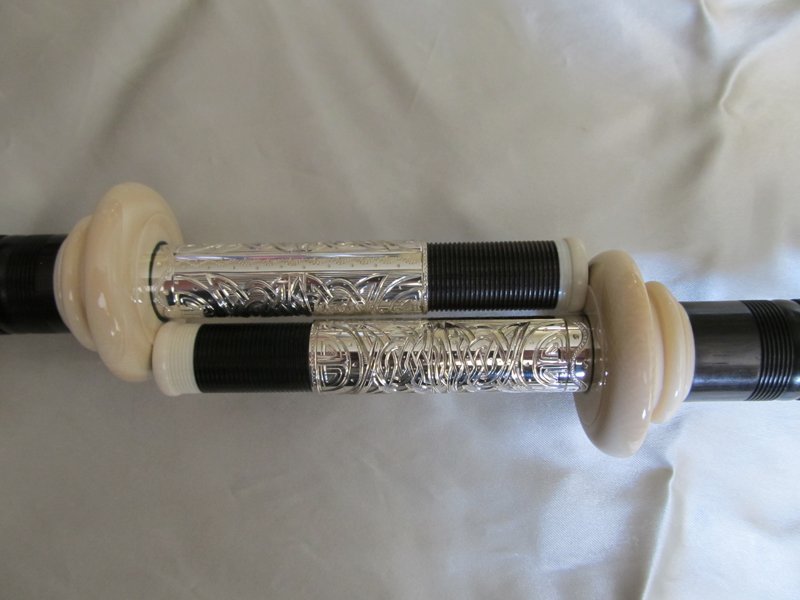
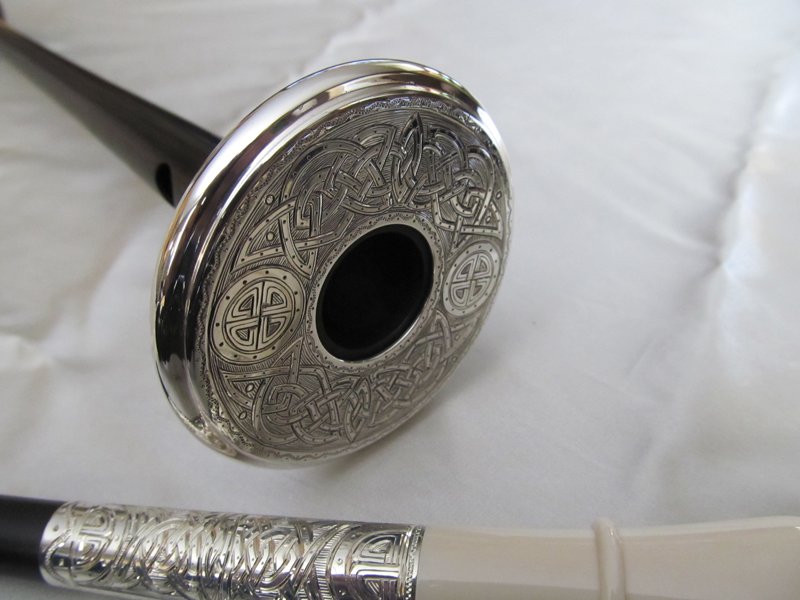
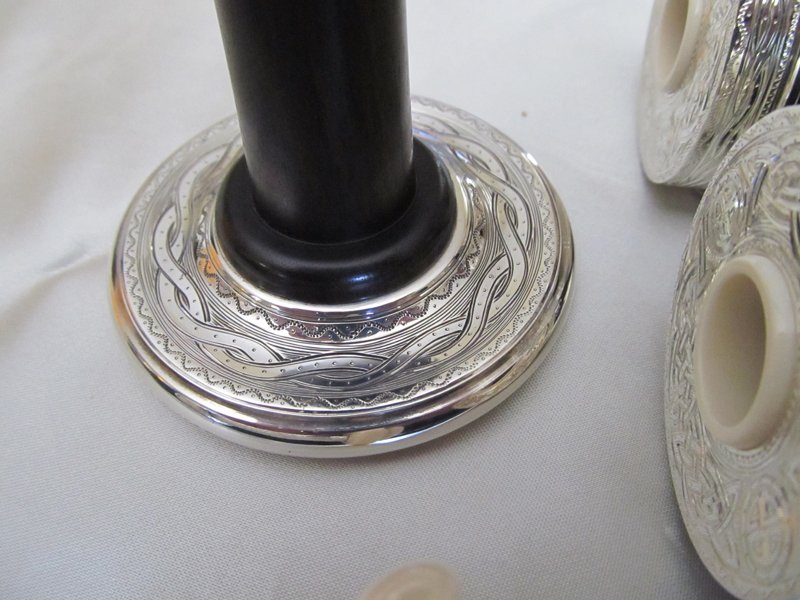
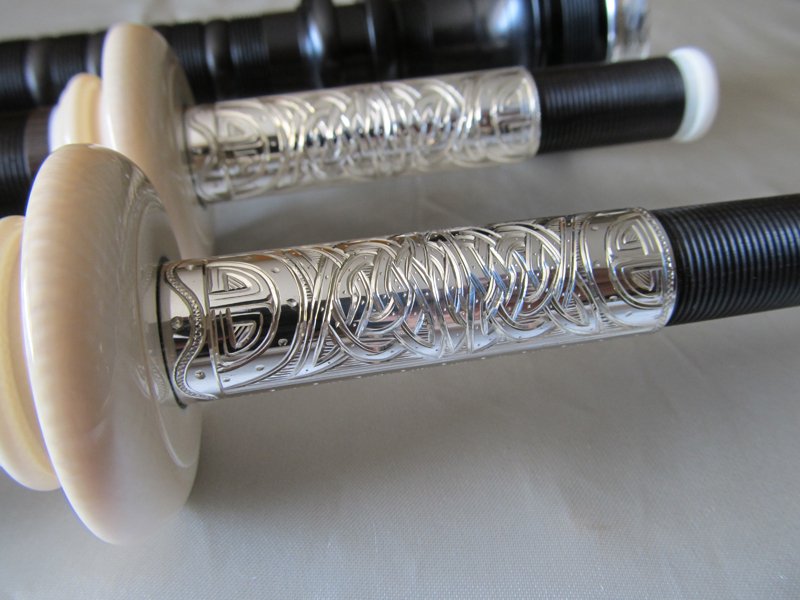
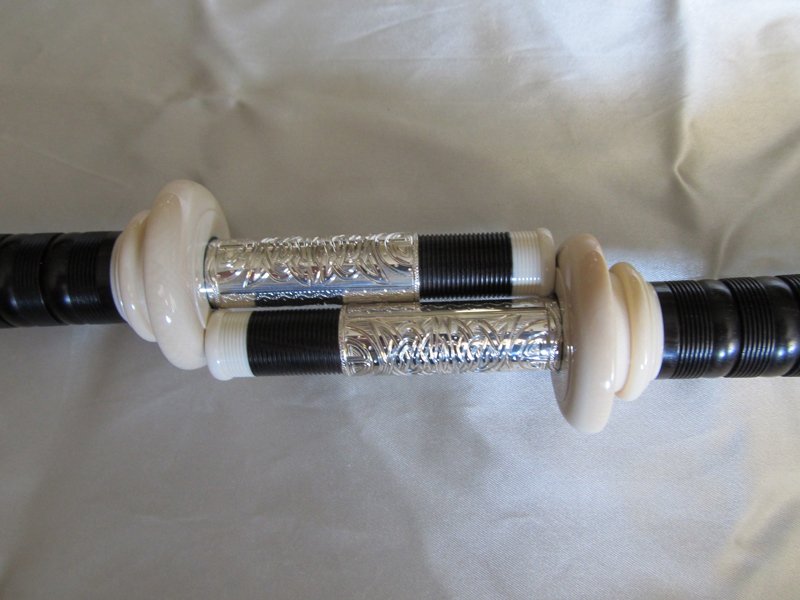
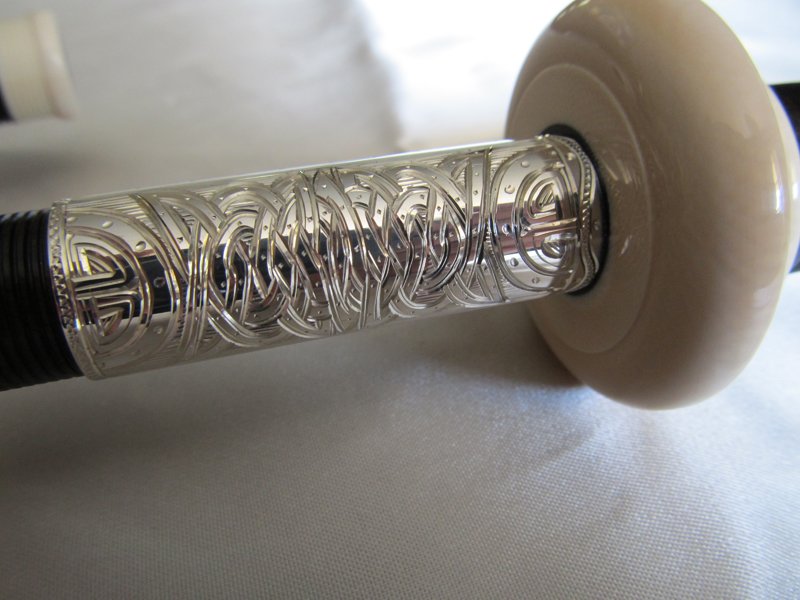
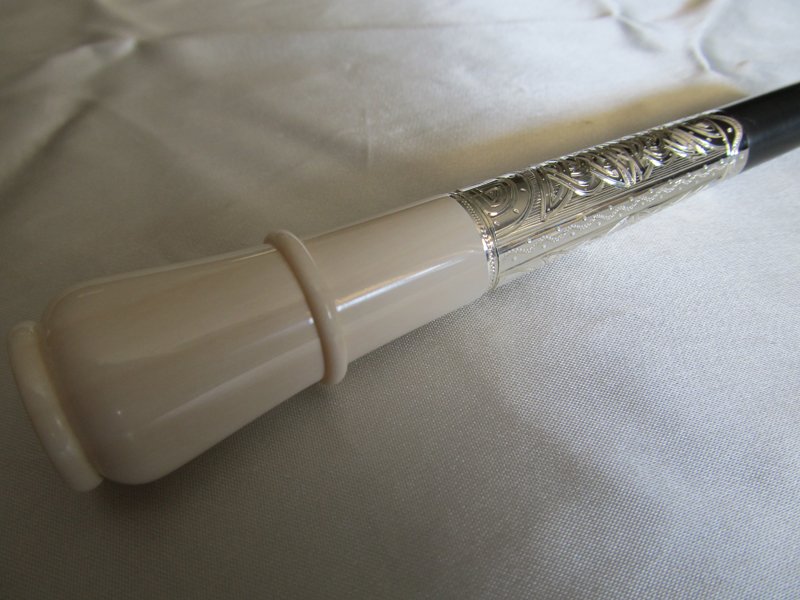
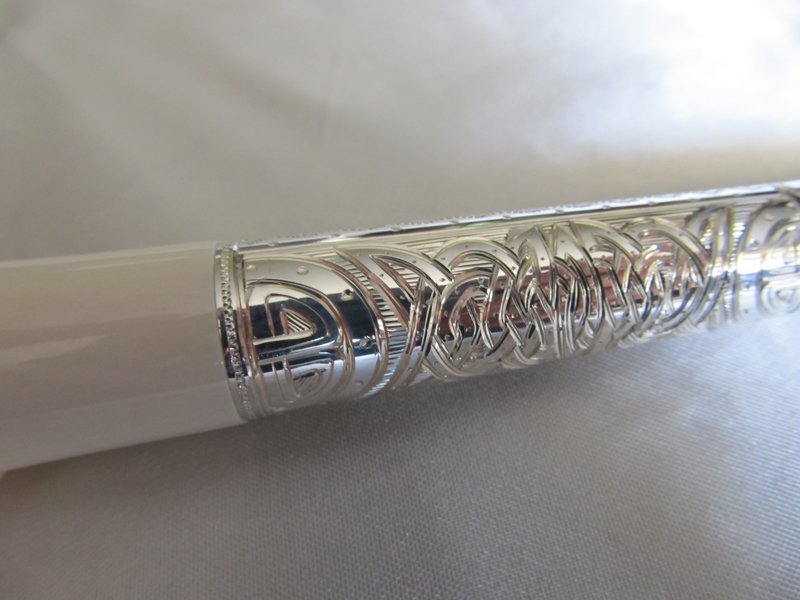
2011 Atherton bagpipe in African blackwood. Elephant ivory projecting mounts, underbushes, hemp stops, and mouthpiece. 1903 pattern sterling silver. Atherton pipe chanter. All parts precision threaded.
Ivory
Archaeological digs have unearthed early civilized man wearing mammoth ivory jewelry. One can only imagine the intensive labor and arcane techniques used to fashion an ivory bead with stone tools. Experts estimate that a set of ivory bracelets found at these digs could take thousands of hours to complete. The allure of ivory, it seems, is universal and timeless.
The history of the rise and decline of the ivory trade is fascinating. As a craftsman and instrument maker I enjoy the in-depth study of the materials used currently and historically in my trade. Knowing every detail of the materials I use ultimately leads to making a better instrument, and to preserving the already great ones. I'm fortunate to be able to have made pipes from the same materials used 150-200 years ago. My pipes have included cocus, ebony, elephant ivory, narwhal ivory -- materials that in the near future will be exceedingly rare, and in some cases, not available at all.
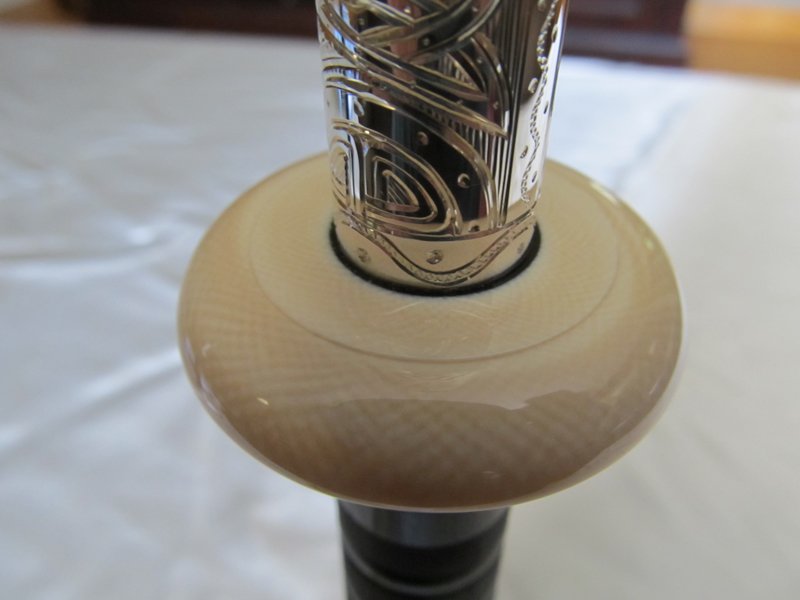
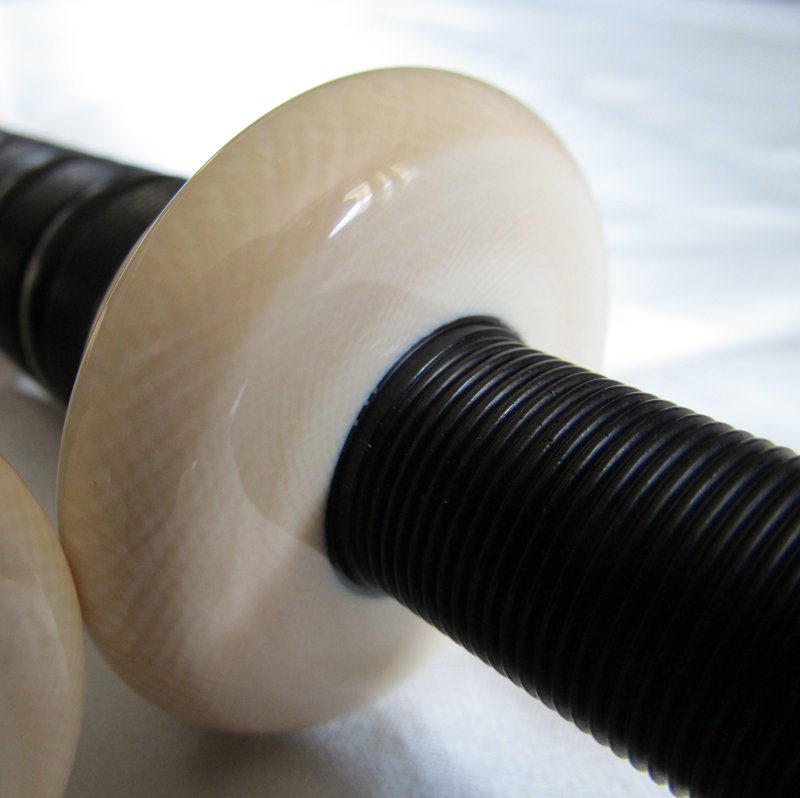
The tusk used for the instrument shown below shows beautiful Schreger patterning (named after Bernhard Schreger). The intense cross-hatched lines are the result of odontoblasts (special cells) laying down layer over layer of collagen, from the outside-in, that form the tusk. In the images below, the cross-sectional tusk displays the growth rings also known as Lines of Owen. Each ring represents 5-7 years of growth. The color, richness, and density of the ivory is genetic, meaning that one thousand tusks will yield one thousand different shades and patterns of ivory.
African ivory is superior to Asian ivory for depth of color, richness, and intense Schreger patterning. Asian ivory is whiter, more opaque, and has a general appearance that is inferior to the African variety and eschewed by the expert. Asian ivory can be found on bagpipes of dubious origin and provenance from the post WWII era -- I'll refrain from mentioning specific makers.
In an 1893 interview with Duncan MacDougall published in the People's Journal-- MacDougall is asked about his source of ivory. Duncan's response is "In Dundee-- I come down when the whalers come in. It's the sea ivory I use; the horns of the walrus, the husks of the sea lion, and the blade of the swordfish…Here is a whole set of drones and chanters made out of a huge narwhal horn."
This is an interesting statement considering that most of Duncan's surviving sets are mounted in elephant ivory, as evidenced by the Schreger patterning.
Walrus ivory has a unique appearance due to having both primary and secondary dentin. Narwhal, too, is unmistakable in appearance. Once you've seen it on a set of pipes it would never be misidentified as any other type of ivory. While his sets with sea ivory are around they seem to be curiously in the minority.
As beautiful as narwhal or other sea ivories may be, none of them were ever as coveted or prized as elephant ivory. Interestingly, the 1890s saw elephant ivory double in price in response to an explosion in worldwide demand. Perhaps sea ivory was an acceptable alternative. The godowns (warehouses) of London at this time held massive amounts of elephant ivory but only the odd barrel of narwhal and mammoth ivory.
Ivory had long been used for musical instruments-- guitars, violins, bagpipes -- but it would be the veneered ivory keys of the piano that would create an insatiable demand for the material. At its peak, the piano key industry (Ivoryton, Connecticut) was using two hundred tons of ivory annually.
When sold in bulk on the world market, African ivory was graded according to its origin and quality. The best of the best was the 'soft ivory' that came from herds on the east coast.
The west coast herds yielded 'hard ivory' but turners, carvers and other end-users preferred the soft variety. Exotic names like Bagatelle and Scrivello were used to describe a specific style of tusk. Bagatelles were the smaller tusks, a Cutch was a larger tusk generally around 40 pounds.
The most prized tusks were the Scrivelloes. These tusks fetched a premium price because they were the perfect size for making billiard balls. Scrivelloes are also the perfect size for making bagpipe projecting mounts. The tusks come from the females and are straighter with less of a radius and a straighter nerve channel.
Pipe makers have historically made their projecting mounts with symmetrical Schreger lines on each side of the mount. Achieving this aesthetic goal is not guaranteed by using 'any old tusk' -- a very specific size of tusk must be used -- the Scrivello. Smaller tusks lack the intense Schreger patterning, larger tusks have the patterning at a diameter too great to be seen on a finished projecting mount.
This size of tusk is still available today (though rare) and this is what I use on my new instruments -- I do not use recycled or so-called reclaimed ivory.
001

002

003

004
005
006

007

008

009

010

011

012
013

014

015

016
017

018

019

020

021

022
023

024

025

026

027
028
029

030
031
032

033
034

035

036

037

038

039

040

041

042
043

044

045

046

047

048

049

050

051
052

053

054

055

056

057

058

059

060
061

062
063

064
065

066
067

068

069

070

071

072

073

074

075

076
077
078

079
080

081
082

083

084

085

086

087
088

089

090

091
092

093

094

095

096
097

098
099

100

101

102
103

104

105

106

107

108

109
110
111

112
113
114

115

116

117

118

119

120
